
Powder coating
Powder coating – COOPERATION
Powder coating – involves applying powder paint (consisting of electrified particles (20-100 μm)) to a conductive surface, e.g., metal. The applied powder layer remains on the surface of the painted part due to electrostatics.
Types of powder coating
In powder coating, two main techniques of electrification and powder paint application can be used:
- electrostatic spraying – a high-voltage method of 40-100 kV, commonly known as “corona,”
- electrokinetic spraying – a triboelectrification, friction method, known as “tribo.”

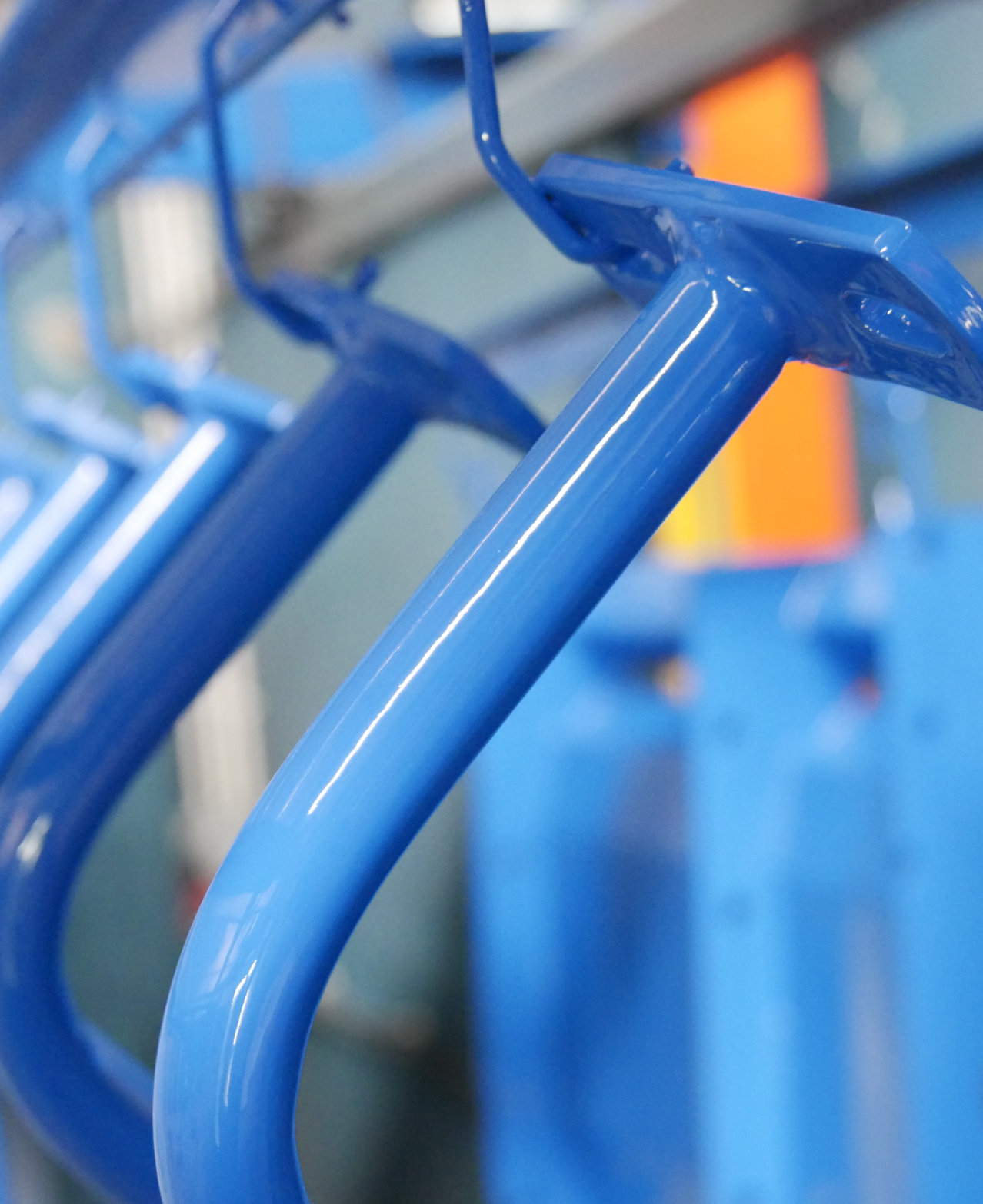
Advantages of powder coating
Powder coating is beneficial for the following reasons:
- It is ecological – there are no solvent and thinner emissions into the environment.
- Closed ventilation systems result in significant energy savings.
- Provides anti-corrosion protection for coated metals and other materials.
- Use of the entire coating material (unembedded powder particles can be recovered).
- Masking of machining imperfections thanks to the thin coatings obtained (60-80 μm).
Types of Powder Coating Paints
There is a wide selection of different types of powder coating paints available on the market:
- epoxy, which allows for the creation of a coating with high resistance to various types of mechanical interactions.
- polyester-epoxy, which provides solid resistance to all heat sources, e.g., radiators, and can also be used to paint items that come into direct contact with food.
- polyester, which is resistant to atmospheric factors – bicycles, windows, household and garden equipment.